Part of our guides on negative energy and protection.
Quick answer
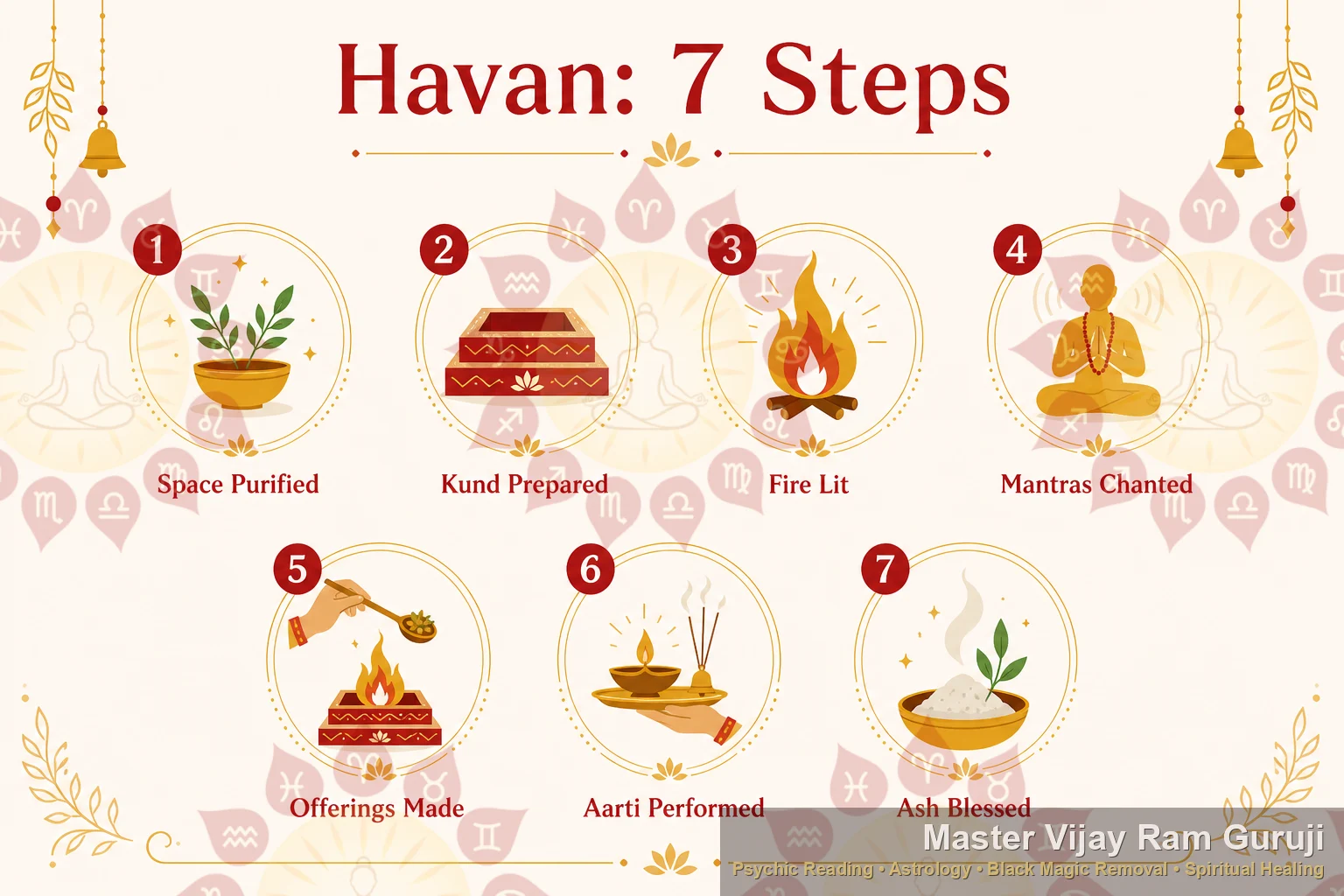
A Vedic cleansing havan begins with space purification and kund preparation, then the priest kindles sacred fire, chants targeted mantras, and offers ghee, herbs, and grains with each recitation. The ceremony closes with aarti and distribution of blessed ash. The full ritual typically takes 1.5–3 hours, depending on the purpose.
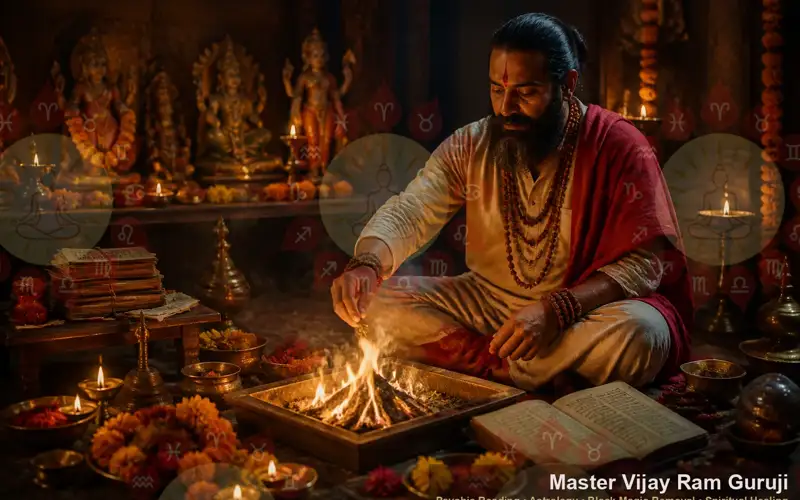
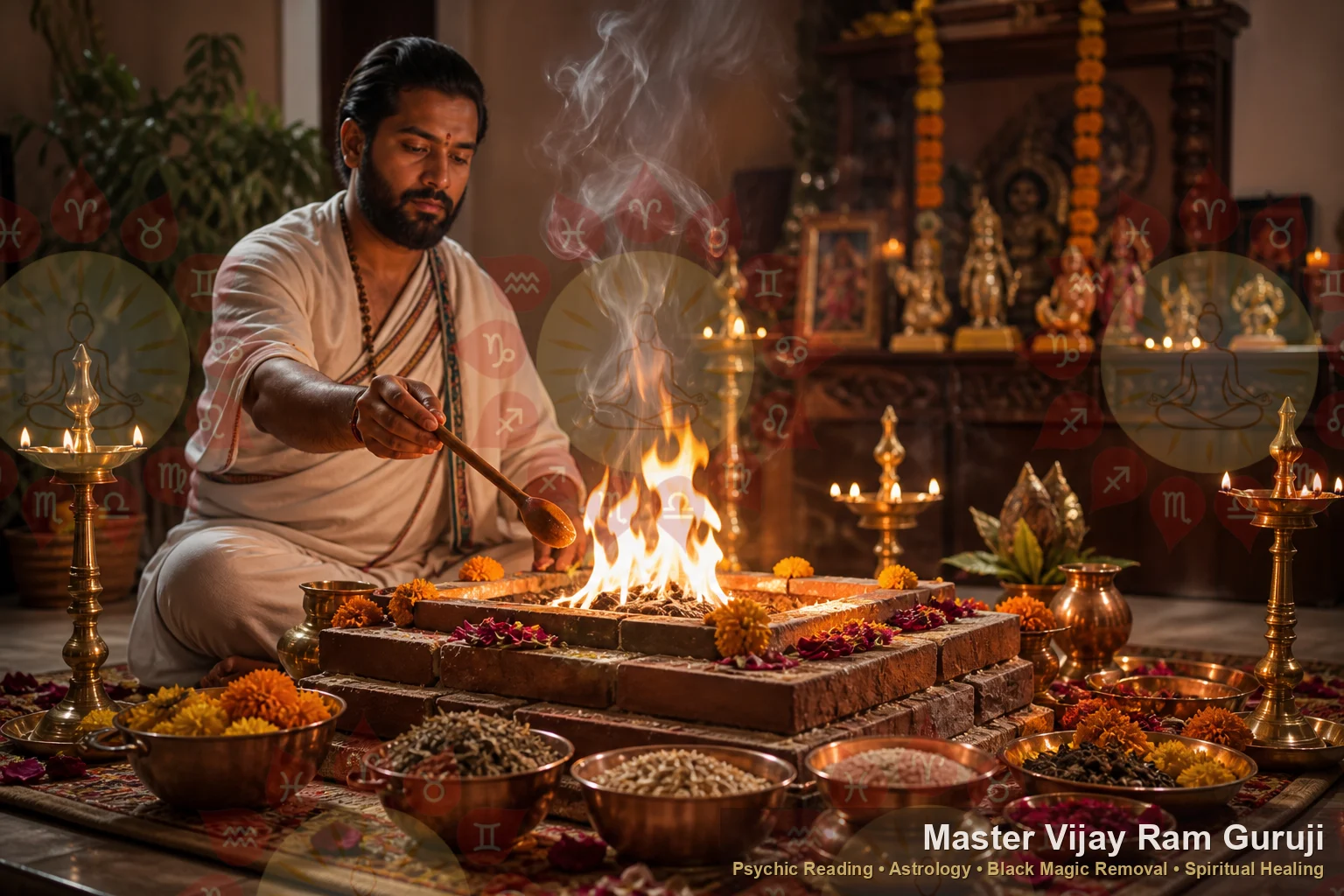
A havan (also spelled yajna or yagya) is a Vedic fire ceremony in which consecrated offerings — ghee, herbs, grains, and wood — are placed into a sacred flame while specific Sanskrit mantras are recited, with the intention of purifying a space, person, or situation of accumulated negative energy, black-magic influences, or spiritual obstruction. In Scarborough and across the Greater Toronto Area, Master Vijay Ram Guruji conducts havan ceremonies both at his consultation centre at 1540 Warden Ave. and, where needed, guides participants remotely by video or WhatsApp.
Why Is a Havan Used for Negative-Energy Removal?
Vedic tradition holds that fire (Agni) is both a purifier and a messenger — it transforms what is offered into a subtler form that reaches beyond the physical. When a person carries the effects of deliberate harmful intent directed at them through occult means, the combination of specific mantras and precisely chosen herbal samagri is understood to break and neutralise those patterns at a vibrational level.
Importantly, a havan is not a shortcut or a performance. The selection of mantras and offering materials depends on a reading of the individual's Vedic chart and a clear assessment of what kind of interference is present. Without that foundation, the ceremony is generic rather than targeted.
What Does the Preparation Stage Involve?
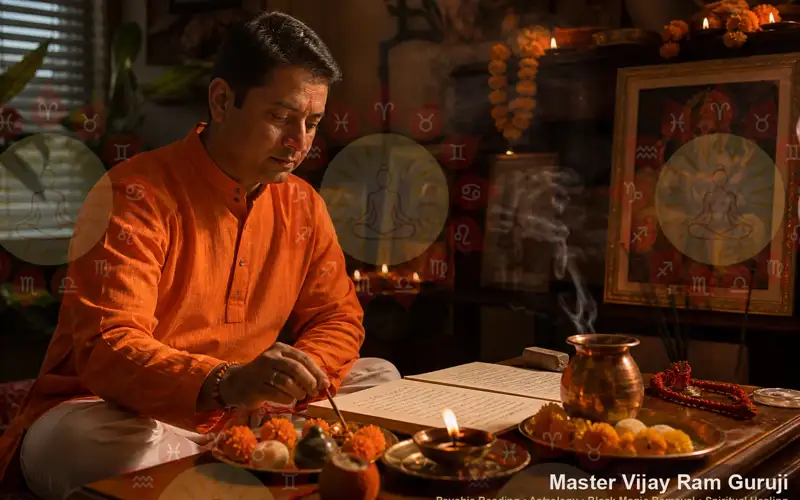
Before the fire is ever lit, significant preparation takes place. The space itself is purified — typically using cow dung ash, Gangajal (sacred water), and camphor smoke — to establish a clean ritual environment. The havan kund (fire pit) is constructed or positioned according to Vedic geometry: traditionally square, oriented to the cardinal directions, and sized in proportion to the scope of the ceremony.
- Samagri selection: The blend of dried herbs, resins, roots, and aromatic woods is chosen for the specific intent. For cleansing purposes this may include guggul, loban, camphor, sesame, barley, and specific medicinal wood chips.
- Kalash setup: A copper or brass water pot (kalash) is consecrated and placed near the kund as a vessel for divine energy during the ritual.
- Sankalpa (intention-setting): The officiant and the participant formally state the purpose of the havan — the person's name, lineage, and the specific aim — binding the ritual to that individual.
How Is the Sacred Fire Kindled?
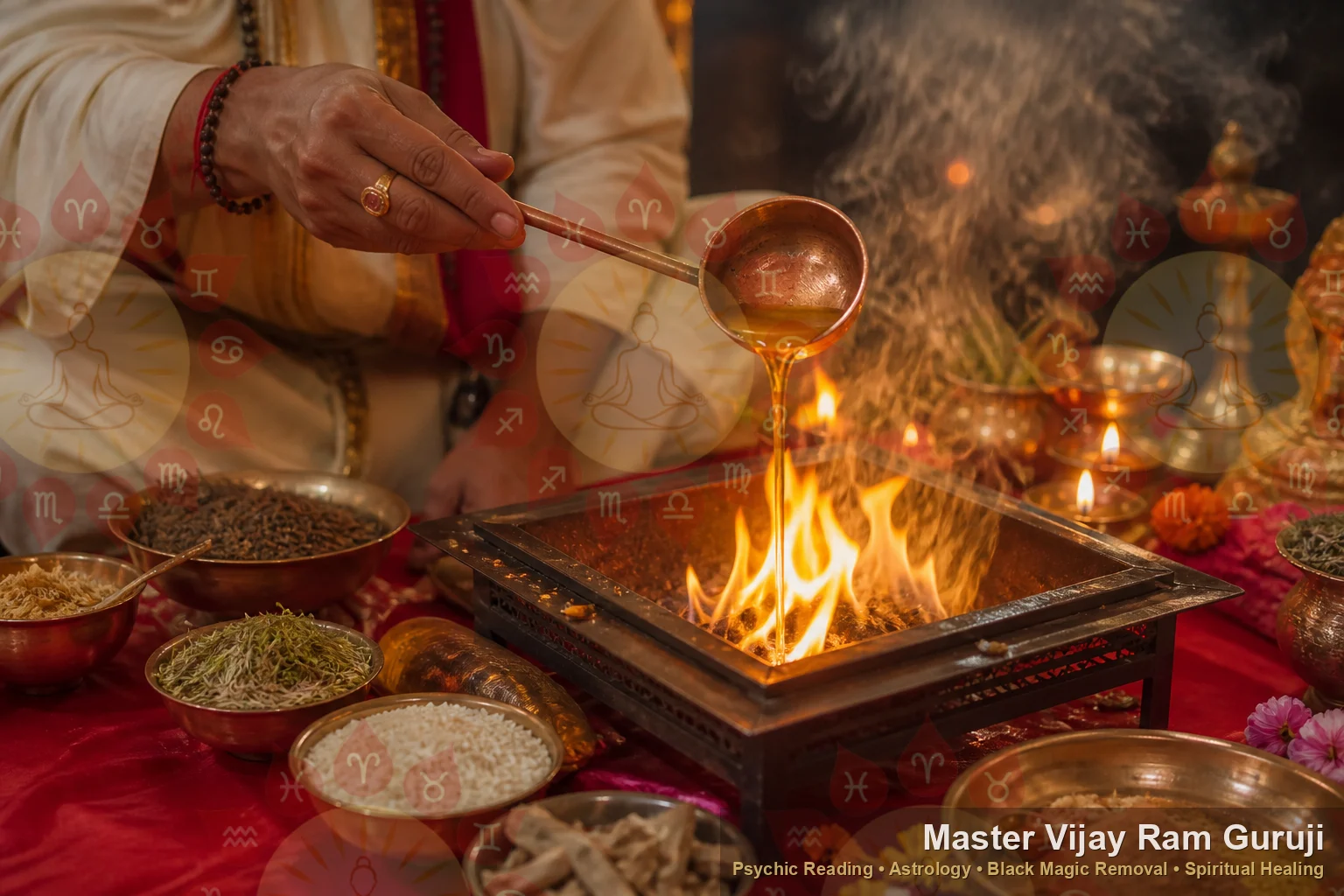
The fire is started using mango wood or another auspicious kindling, ignited with camphor — never with synthetic fuels. Once the initial flame catches, ghee (clarified butter) is offered to stabilise and feed it. The priest chants the Agni Stuti, invoking the fire deity, before the main mantra cycles begin.
This kindling phase is not rushed. The flame must be steady and bright before offerings are made — a flickering or reluctant fire is read as a sign to pause and re-purify the space.
What Happens During the Mantra and Offering Cycles?
This is the core of the ceremony and the most time-intensive stage. The practitioner chants a mantra — often in cycles of 108 repetitions — and at designated points (ahuti) pours a small measure of samagri or ghee into the flame while pronouncing Svāhā, the ritual offering-word.
- Ganesh Puja: The ceremony opens by invoking Lord Ganesha to remove obstacles from the ritual itself.
- Navagraha invocation: The nine planetary influences are acknowledged, and any that are identified in the chart as contributing to distress receive specific offerings.
- Primary mantra cycles: For black-magic or curse removal, this typically centres on Maha Mrityunjaya mantra, Sudarshana mantra, or specific Durga and Kali stotras — chosen according to the nature of the affliction. Those seeking further understanding of how curse patterns are addressed spiritually can learn about the broader work of lifting harmful intentions placed on a person.
- Targeted samagri offerings: Each offering cycle may use a different herb or grain, each associated with a planetary or elemental quality relevant to the cleansing.
- Name-linked offerings: At intervals, the participant's name and the sankalpa are repeated aloud, ensuring the ritual energy remains anchored to the specific person.
A focused cleansing havan typically involves between 1,008 and 10,008 individual ahuti offerings, which is why the ceremony can run from 1.5 hours up to a full day for extended cases.
What Are the Signs That the Havan Is Working Correctly?
Practitioners observe the fire throughout the ceremony as a form of real-time feedback. Certain signs are considered positive indicators:
- Flame burns tall, steady, and predominantly golden
- Smoke rises straight upward without excessive billowing
- A pleasant, sweet fragrance fills the room
- The participant feels a gradual sense of calm or lightness
- The ash formed is pale grey or white rather than dark
It is equally honest to note that a single havan is not always sufficient for deeply rooted situations. Master Vijay Ram Guruji advises that some cases — particularly those involving sustained sihr or witchcraft-based interference — benefit from a series of ceremonies scheduled over several weeks, alongside complementary practices.
How Does the Ceremony Close?
Once the final mantra cycle is complete, the ceremony moves into the Purnahuti (complete offering) — a larger, final offering of all the samagri, coconut, and ghee combined, symbolising the totality of the request being surrendered to the fire. This is the ritual's formal climax.
After Purnahuti, aarti is performed — a clockwise circling of lit camphor before the flame and any deities present — and the participants receive prasad (blessed food, typically dry fruit or sweets) and a small amount of the cooled, consecrated ash (vibhuti). The vibhuti may be applied to the forehead or dissolved in water according to tradition.
The kund is then allowed to cool naturally. The residual ash is not discarded carelessly — it is typically released into flowing water or placed at the base of a sacred tree.
Can a Havan Be Combined With Other Protective Practices?
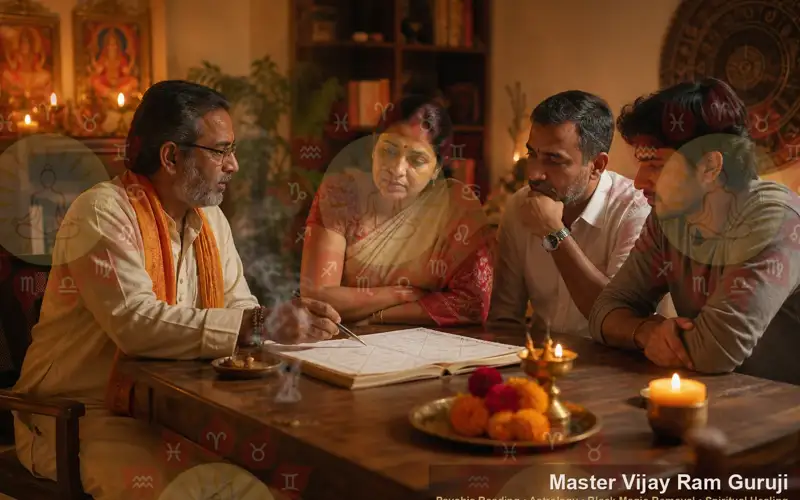
Yes, and in most cases it is. A havan addresses the energetic environment and the accumulated residue of negative influence. Alongside it, Master Vijay Ram Guruji may recommend a personal puja, the wearing of a specific yantra or protective gemstone, or ongoing daily mantra practice. Clients in Markham, Pickering, and across the Greater Toronto Area who cannot travel to Scarborough in person are guided through their role in the ceremony by video call.
For those concerned about ongoing vulnerability after a cleansing, understanding how ongoing spiritual shielding works after an initial removal is a natural next step. Similarly, situations involving voodoo-style workings may require a complementary approach — you can read about the specific methods used when voodoo influences are identified.
If you are in Scarborough, the Greater Toronto Area, or anywhere reachable by phone or video, you are welcome to reach out and describe your situation — consultations are available in English, Tamil, Hindi, Punjabi, Gujarati, and Urdu, 24 hours a day, at (647) 640-9586.
Please note: a havan is a spiritual practice rooted in Vedic tradition. It does not replace medical, psychological, or legal advice. If you are experiencing health concerns, please consult a qualified healthcare professional.
Frequently asked questions
How long does a Vedic cleansing havan ceremony take?
A standard cleansing havan runs between 1.5 and 3 hours. More complex cases involving deeply rooted black-magic patterns or extensive mantra cycles — up to 10,008 ahuti offerings — may take a full day or be spread across multiple sessions over several weeks.
What is samagri and why does it matter in a havan?
Samagri is the blend of dried herbs, resins, grains, and aromatic woods offered into the havan fire. Each ingredient carries specific Vedic properties aligned with planetary energies or intentions. For a cleansing havan, samagri typically includes guggul, loban, camphor, sesame, barley, and medicinal wood chips.
Do I need to be physically present for a havan to be effective?
Physical presence is traditional and preferred, as it allows the participant to make personal offerings and receive vibhuti directly. However, Master Vijay Ram Guruji also conducts proxy havans for clients across the GTA and beyond, guided by video or WhatsApp, where the intent is formally set through a distance sankalpa.
What is the difference between a havan and a regular puja?
A puja is a devotional worship ritual centred on a deity's image, using flowers, incense, and lamps. A havan adds a consecrated fire pit and physical offerings burned in flame, making it a more intensive purification process. Many full ceremonies combine both: puja first, then havan.
Which mantras are used in a havan for black magic removal?
Common choices include the Maha Mrityunjaya mantra for protection and healing, Sudarshana mantra for cutting negative ties, and specific stotras of Goddess Durga or Kali for dissolving dark influences. The final selection depends on the individual's Vedic chart and the nature of the affliction.
Is a single havan enough to remove black magic completely?
It depends on the severity and duration of the influence. A single well-conducted havan can produce significant relief in straightforward cases. Sustained or layered situations typically require a series of ceremonies alongside ongoing protective practices, as honestly assessed by the practitioner after an initial consultation.
What happens to the ash (vibhuti) after the havan?
The cooled ash is considered consecrated. A portion is given to the participant to apply to the forehead or dissolve in water. The remainder is respectfully released into flowing water or placed at the base of a sacred tree — never simply discarded.
Can a havan be performed for a home or business, not just a person?
Yes. Havan ceremonies are frequently conducted to cleanse a home or workspace of residual negative energy, particularly after a difficult period, a bereavement, or a sense of persistent misfortune. The sankalpa is simply set to name the property and the intention rather than an individual.
People also ask
What is a havan in Hinduism?
A havan (also called yajna or yagya) is a Vedic fire ritual in which consecrated offerings — ghee, herbs, grains, and wood — are placed into a sacred flame while Sanskrit mantras are recited. It is one of the oldest forms of Vedic worship, used for purification, blessing, and planetary appeasement.
How do I know if I need a havan or just a puja?
A puja is appropriate for regular devotion and blessings. A havan is recommended when there is a specific spiritual obstacle to address — such as persistent negative energy, a felt sense of being cursed, or an astrologically difficult planetary period. A Vedic astrologer can assess which is more suitable.
What does havan smoke do spiritually?
In Vedic tradition, the smoke from a havan carries the transformed energy of the offerings upward and purifies the surrounding atmosphere. The aromatic compounds in samagri herbs also have documented antimicrobial properties, supporting both a spiritual and a physical sense of cleansing in the space.
Can a havan remove a curse or hex?
Vedic tradition regards a focused cleansing havan, with correctly chosen mantras and samagri, as one of the primary methods for dissolving the energetic patterns associated with a curse or hex. It is typically most effective when combined with a full assessment of the individual's chart and situation.
How much does a havan cost in Toronto or Scarborough?
Fees vary based on the duration, the complexity of the ceremony, and whether it is conducted in person or remotely. Master Vijay Ram Guruji does not publish standard prices online. Contact the practice directly at (647) 640-9586 to discuss your specific situation and receive accurate guidance.
References & further reading
Keep exploring
Serving Scarborough and the Greater Toronto Area
In person at 1540 Warden Ave., or by phone, video & WhatsApp — including: