Part of our guides on evil eye and nazar.
Quick answer
Nazar, also called the evil eye or buri nazar, is a negative energetic influence believed to be transmitted — often unintentionally — through an intense or envious gaze. It is recognised across South Asian, Middle Eastern and Mediterranean cultures, and its effects are said to include sudden fatigue, illness, and unexplained misfortune.
Nazar is a traditional spiritual concept — found across South Asian, Middle Eastern, and Mediterranean cultures — that describes a harmful energetic influence transmitted through an envious or overly intense gaze, often without any ill intent on the part of the person giving it. In Scarborough and across the Greater Toronto Area, where dozens of cultures live side by side, families of South Asian, Caribbean, Middle Eastern, and South European backgrounds frequently seek guidance when they suspect nazar has touched a loved one.
What Does 'Nazar' Actually Mean?
The word nazar comes from Arabic and Persian roots meaning 'gaze' or 'sight.' In everyday South Asian usage, buri nazar — literally 'bad gaze' — refers specifically to the harmful version. The broader English term evil eye carries the same meaning and is used interchangeably across Hindu, Muslim, Sikh, and many other communities.
The core belief is consistent: concentrated feelings of envy, admiration, or desire — even subconscious ones — can be projected outward and affect the person, child, animal, or object being looked upon. The effect is not considered a conscious curse; it can happen entirely without malice.
Is Nazar a South Asian Belief, or Is It Universal?
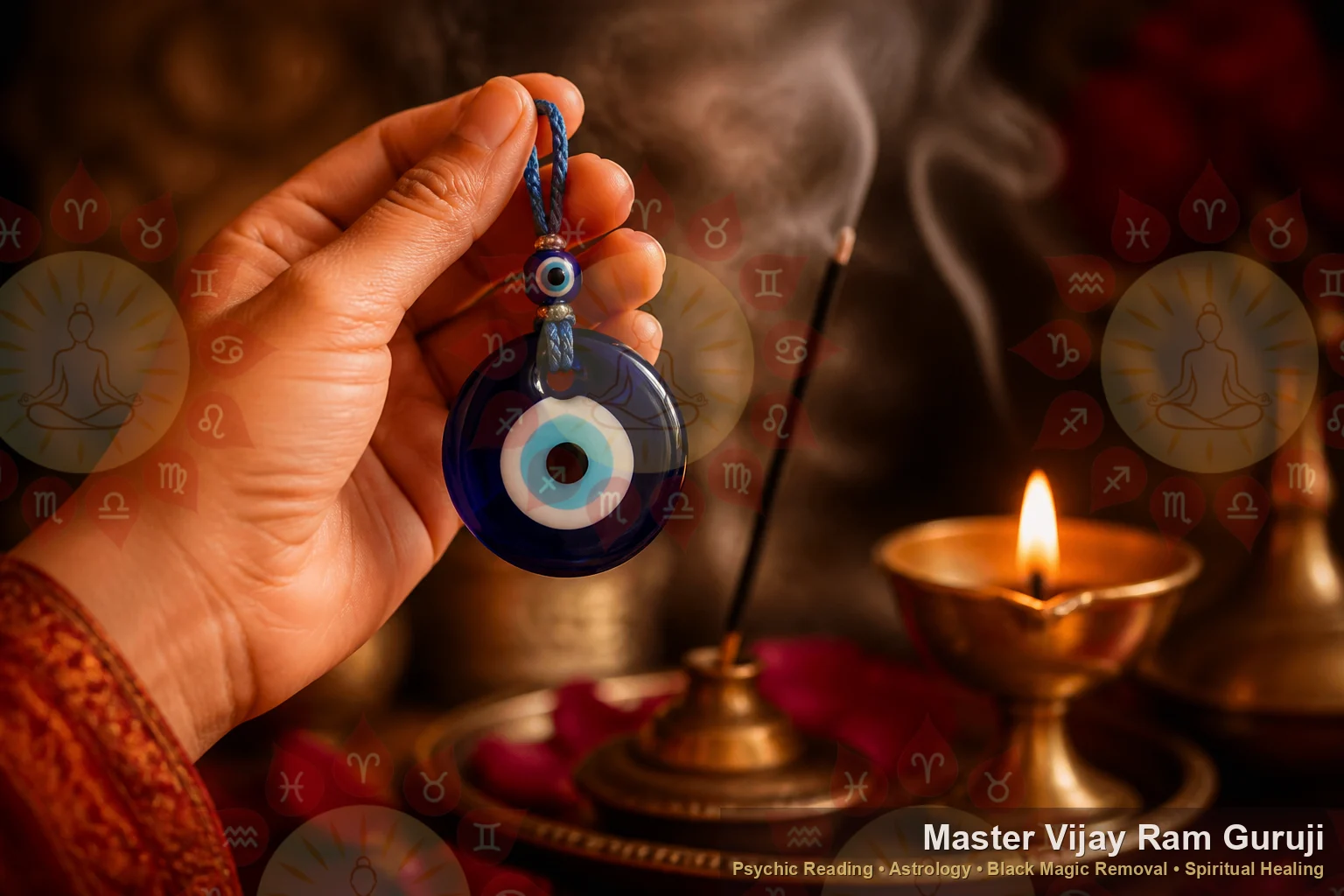
Nazar is one of the most geographically widespread spiritual beliefs recorded by anthropologists. References to the evil eye appear in ancient Greek texts, the Hebrew Bible, the Quran, and early Roman writings. Today, protective symbols — the blue nazar boncuk amulet in Turkey, the hamsa hand in North Africa and the Middle East, the black kajal dot placed on South Asian babies — exist across dozens of distinct cultures.
In the Greater Toronto Area, where communities from South Asia, East Africa, the Caribbean, and the Mediterranean have built deep roots, belief in nazar is far from a fringe concern. It is a living cultural and spiritual tradition that many families take seriously alongside their modern lives.
What Are the Signs That Someone May Have Nazar?
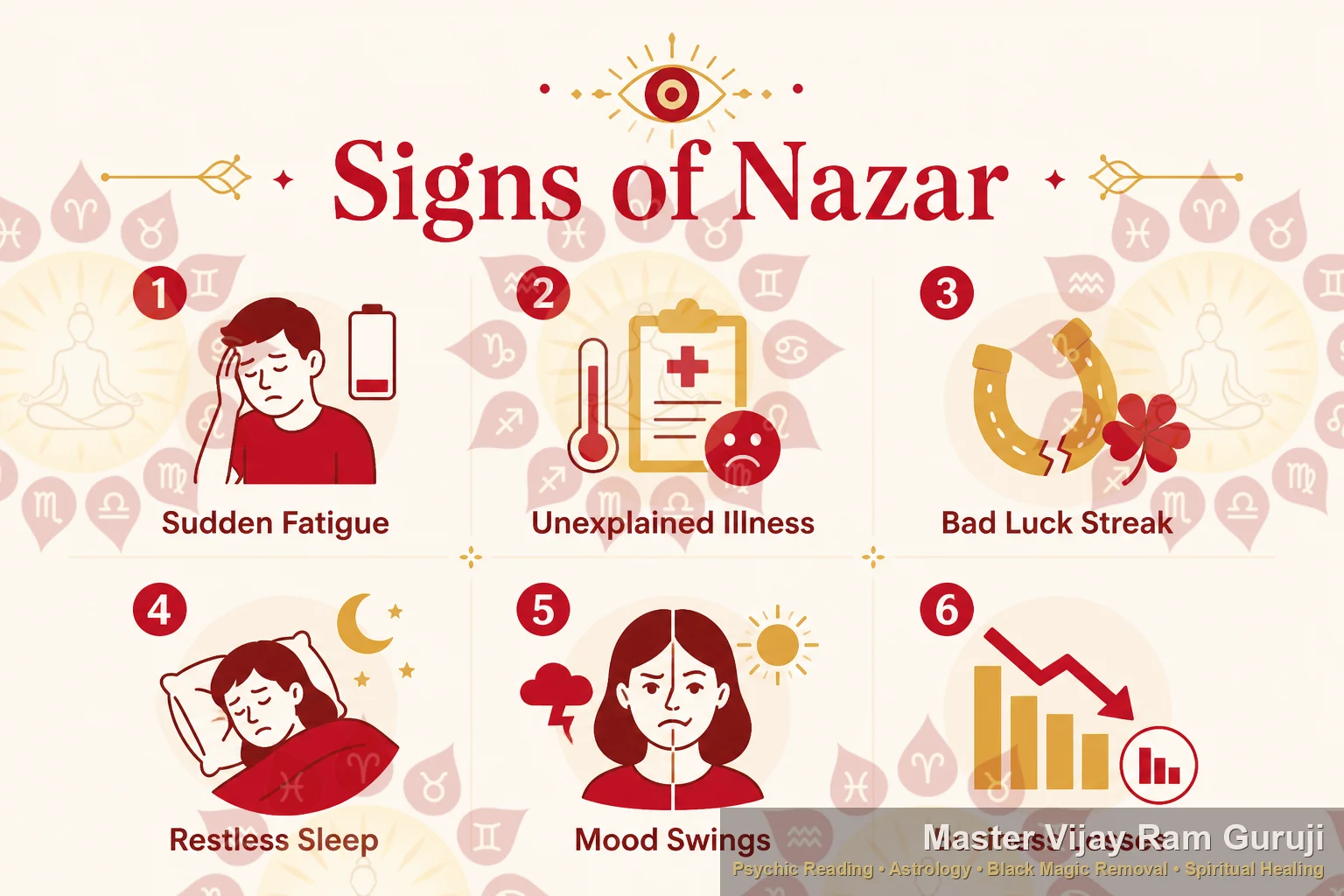
Because many of the signs overlap with ordinary life stress, it is important not to jump to conclusions. Equally, many families find comfort in exploring both conventional explanations and traditional ones. Common signs that families associate with nazar include:
- Sudden, unexplained fatigue — feeling drained for no clear physical reason
- Persistent bad luck — a run of setbacks in work, business, or relationships after a period of visible success
- Restless sleep or recurring nightmares, particularly in children
- Unexplained irritability or mood swings in an otherwise settled person
- Physical symptoms such as headaches or stomach discomfort that doctors cannot trace to a cause
- Stalling in progress — projects, job applications, or relationships that were going well suddenly hit inexplicable obstacles
Important note: if you or a family member are experiencing physical or mental health symptoms, please see a qualified healthcare professional first. Spiritual guidance is a complement to, not a replacement for, medical care.
How Is Nazar Traditionally Removed?
Across cultures, nazar removal rituals share a common structure: identifying the affected person, drawing the negative energy outward, and then neutralising or discarding it. Specific methods vary by tradition but commonly include:
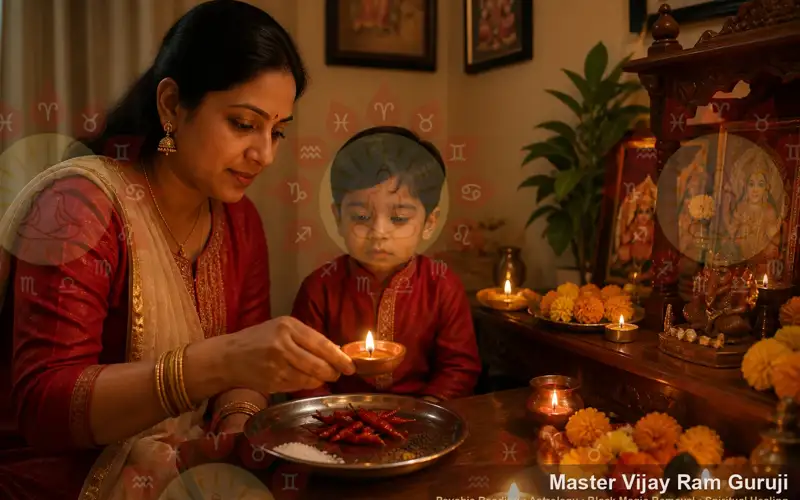
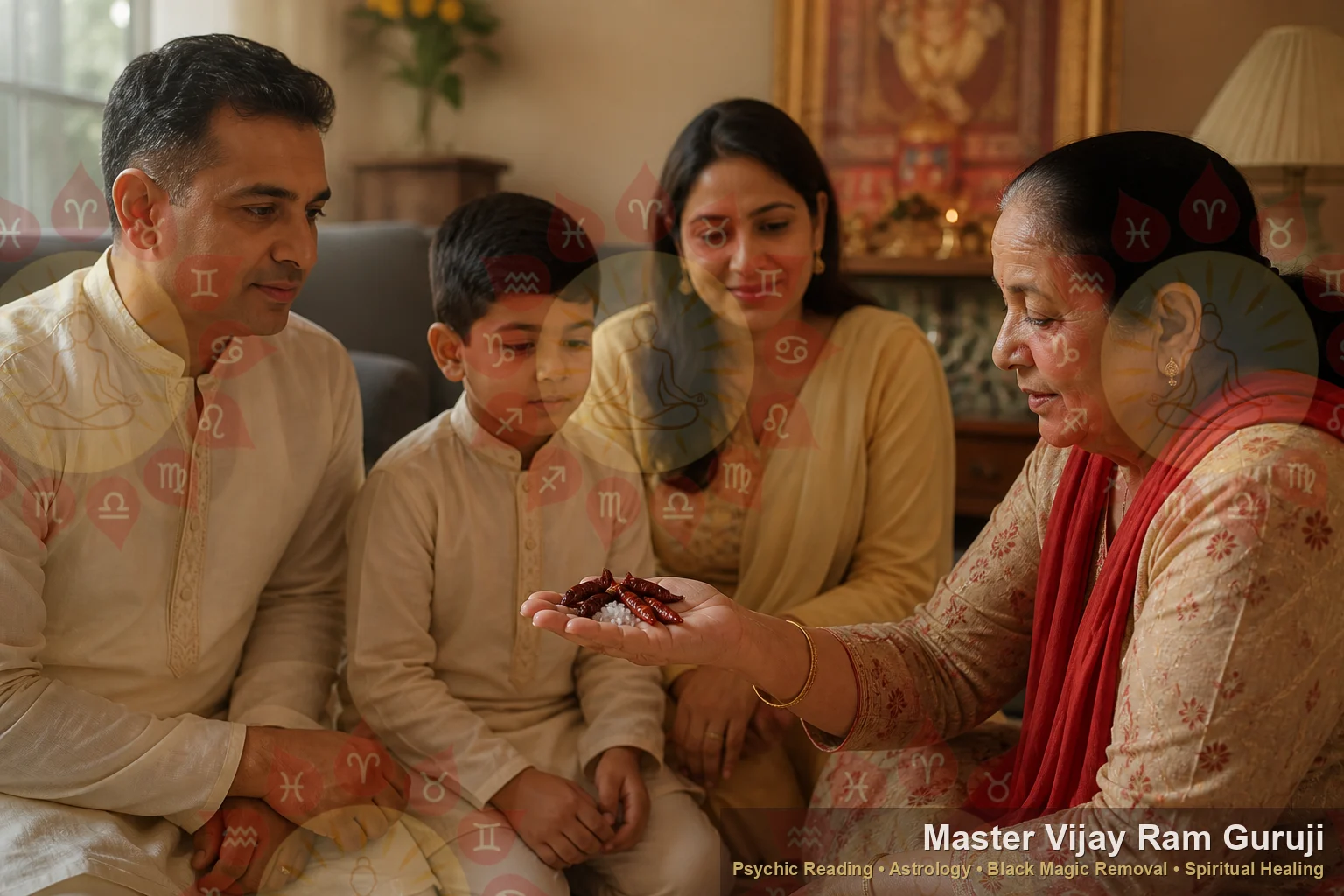
- Salt and red chili ritual — dried chilies and coarse salt are rotated around the affected person and then burned; a change in smell or flame is read as a sign the nazar has lifted.
- Mustard seed cleansing — mustard seeds are circled around the individual and discarded at a crossroads or in running water.
- Prayer and recitation — specific Quranic verses (such as Surah Al-Falaq), Sanskrit mantras, or Gurbani passages are recited over the affected person or their photograph.
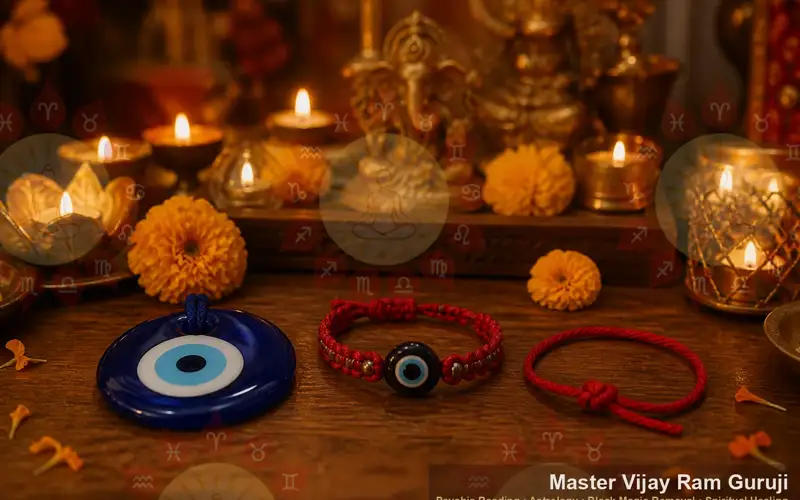
- Protective amulets — a kavach or taweez energised through puja or prayer is worn to shield against future nazar. Families across Scarborough and Markham frequently request these for newborns and young children.
- Havan (sacred fire ritual) — offerings are made into a consecrated fire while specific mantras are chanted, purifying the individual's aura and surrounding energy field.
Master Vijay Ram Guruji, consulting from his centre at 1540 Warden Ave., Scarborough, ON M1R 2S8, assesses each situation individually before recommending a specific approach. Families in Pickering, Richmond Hill, and across the GTA can also connect by phone or video call at (647) 640-9586.
Why Do Children Seem More Vulnerable to Nazar?
In virtually every culture where nazar is recognised, children — especially newborns, thriving babies, and visibly healthy young children — are considered more susceptible. The traditional explanation is that positive attention and open admiration, precisely the kind directed at a new baby, carries the highest concentration of intense feeling.
This is why protective marks, amulets, and prayers are applied to children shortly after birth in many South Asian, Middle Eastern, and South European households. The practice is preventive rather than reactive — a way of shielding the child before any harm occurs.
How Is Nazar Different from a Curse or Black Magic?
This distinction matters, and it is one that a knowledgeable practitioner will clarify during a proper consultation. Nazar is typically unintentional — no one chooses to project it. A curse or hex, by contrast, involves deliberate intent to cause harm, and may require a different form of intervention, such as working with a specialist in clearing deliberate negative energy.
Similarly, nazar differs from a generalised imbalance in a person's aura. If the issue lies more in depleted personal energy than in an external gaze, an approach centred on restoring the aura's natural balance may be more appropriate. A skilled practitioner assesses all three possibilities rather than assuming one cause.
Seeking Guidance in Scarborough and the Greater Toronto Area
Families in Scarborough, North York, Ajax, and throughout the Greater Toronto Area can speak with Master Vijay Ram Guruji about concerns related to nazar. Consultations are available in English, Tamil, Hindi, Punjabi, Gujarati, and Urdu, making it straightforward for families to discuss sensitive cultural matters in the language they are most comfortable with.
If you would like to understand whether a protective kavach or taweez may be appropriate for your family, you can read more about traditional protective amulets prepared through Vedic and spiritual practice. To book a consultation or ask a question, visit the contact page to reach Master Vijay Ram Guruji directly.
Frequently asked questions
What is the meaning of nazar in South Asian culture?
In South Asian culture, nazar (or buri nazar) means a harmful energetic influence caused by an envious or intensely admiring gaze. It is believed to affect people, children, animals, and even businesses, and is addressed through rituals, prayer, and protective amulets across Hindu, Muslim, and Sikh traditions.
Can nazar happen by accident, without the person intending harm?
Yes. Most traditions teach that nazar is often unintentional. Even a loving, admiring gaze — from a friend or family member — can transmit harmful energy if the feeling behind it is very intense. This is why protective measures are used preventively, not just after harm is suspected.
What are the most common signs of nazar in a child?
Common signs include sudden crying or restlessness in an otherwise settled baby, refusal to feed, unexplained fever, excessive sleepiness, or a general change in temperament after the child received a lot of attention or compliments. Always consult a paediatrician to rule out medical causes first.
How is nazar removed in Hindu tradition?
In Hindu tradition, nazar removal often involves rotating dried red chilies, salt, or mustard seeds around the affected person, followed by burning or discarding them. Mantra recitation, a havan fire ritual, and offering prayers at a temple are also common. A knowledgeable practitioner chooses the method based on the individual's situation.
Is belief in the evil eye only found in South Asian communities?
No. Belief in the evil eye is documented across ancient Greece, Rome, the Middle East, North Africa, South Asia, and parts of Latin America. The concept appears in the Quran, in Talmudic literature, and in ancient Greek medical texts, making it one of the most cross-cultural spiritual beliefs in recorded history.
Where can families in Toronto or Scarborough get help with nazar?
Master Vijay Ram Guruji offers consultations at 1540 Warden Ave., Scarborough, ON, and remotely by phone, video, or WhatsApp at (647) 640-9586. Sessions are available in English, Tamil, Hindi, Punjabi, Gujarati, and Urdu, serving families across Scarborough and the Greater Toronto Area.
Does nazar removal replace medical or psychological treatment?
No. Nazar removal is a spiritual and cultural practice rooted in traditional belief. It is offered as a complement to conventional care, not a substitute. Anyone experiencing persistent physical symptoms, anxiety, or depression should consult a qualified doctor or mental health professional first.
What is a kavach or taweez, and does it protect against nazar?
A kavach (Sanskrit) or taweez (Arabic/Urdu) is a protective amulet — typically a small inscribed object or cloth packet — energised through prayer, mantra, or sacred ritual. Many families use these to shield children and adults from nazar on an ongoing basis. Their efficacy is a matter of personal and cultural belief.
People also ask
What does 'buri nazar' mean in Urdu and Hindi?
Buri nazar literally translates to 'bad gaze' or 'evil eye' in both Urdu and Hindi. Buri means bad or evil, and nazar means sight, gaze, or vision. The phrase describes the harmful energetic effect of an envious or intensely admiring look.
How do I know if my baby has nazar?
Signs that South Asian families commonly associate with nazar in babies include sudden, inconsolable crying, refusal to eat, unexplained fever, and unusual lethargy after receiving a lot of public attention. A paediatrician should always be consulted first to rule out illness.
Is the evil eye mentioned in Islam?
Yes. The evil eye is acknowledged in Islamic tradition. The Quran references it, and the Prophet Muhammad is recorded in hadith as confirming its reality. Recitation of Surah Al-Falaq and Surah An-Nas is widely recommended in Islamic practice for protection against the evil eye.
What is the difference between nazar and black magic?
Nazar is typically unintentional — caused by an intense or envious gaze without deliberate harmful intent. Black magic involves a conscious, directed effort to harm someone using specific rituals or spells. They require different assessments and, if confirmed, different forms of spiritual intervention.
Can nazar affect a business or home, not just a person?
Many traditions extend the concept of nazar to homes, businesses, and vehicles — especially when they become newly successful or widely admired. Protective rituals such as havan ceremonies, hanging nazar amulets, and vastu corrections are used by families and business owners across the GTA for this purpose.
How long does a nazar removal ritual take?
The duration varies by tradition and severity. Simple household rituals — such as the salt-and-chili method — take only a few minutes. A formal puja or havan ceremony guided by a practitioner may span one to several hours. Master Vijay Ram Guruji assesses each case individually before recommending an approach.
References & further reading
Keep exploring
Serving Scarborough and the Greater Toronto Area
In person at 1540 Warden Ave., or by phone, video & WhatsApp — including: