Part of our guides on evil eye and nazar.
Quick answer
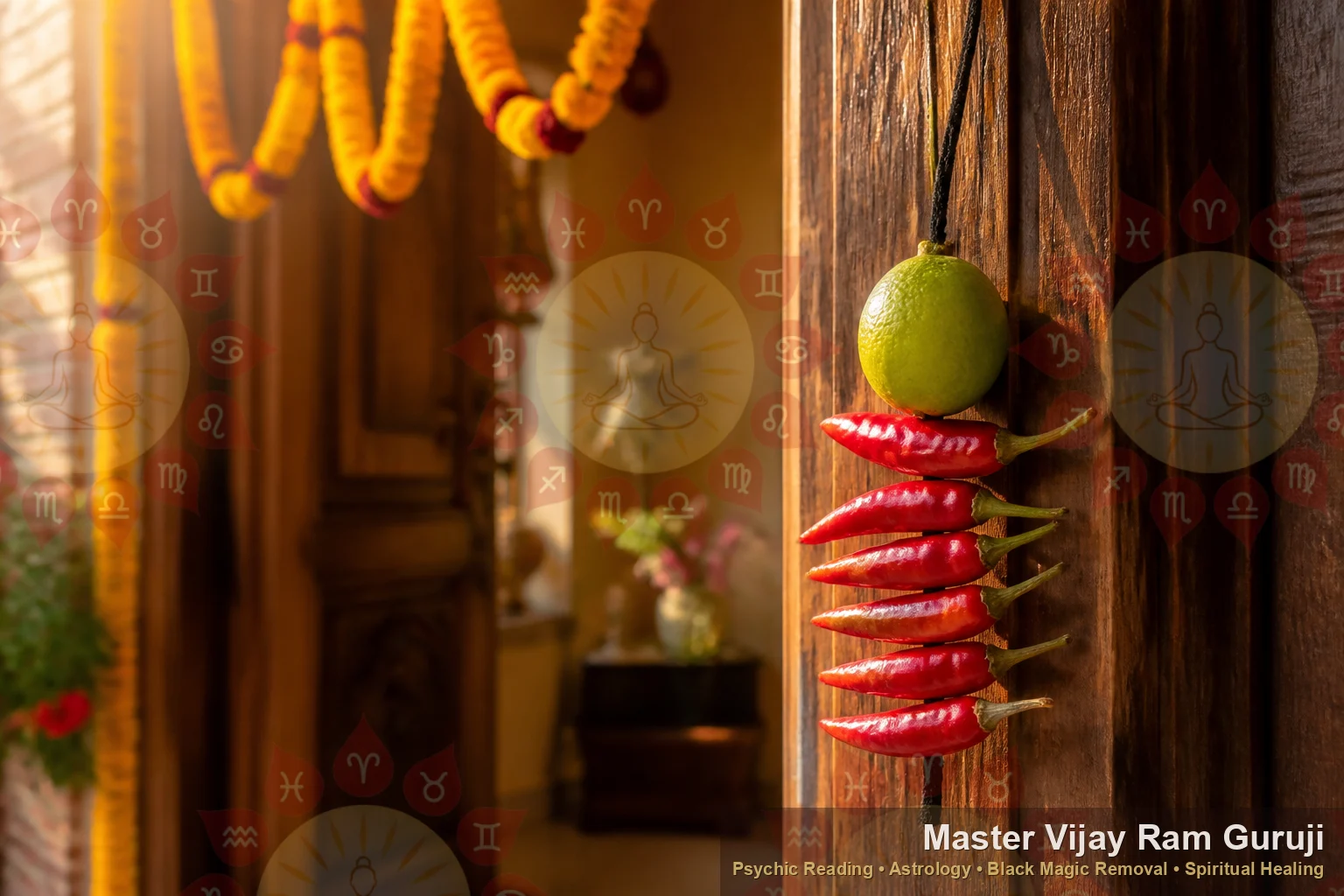
The nimbu mirchi totka — a string of lemon and seven red chillies — is a traditional South Asian protective charm against the evil eye (nazar). Lemon is believed to absorb negative energy while chillies repel harmful intent. Together they form a simple, widely practised nazar shield hung at doorways or entrances.
The nimbu mirchi totka is a traditional South Asian protective charm in which a fresh lemon and an odd number of green or red chillies — most commonly seven — are threaded on a black cord and hung at the entrance of a home, shop, or vehicle to guard against the evil eye, known in Hindi and Urdu as nazar. Few folk practices are as instantly recognisable across the Indian subcontinent, and the ritual is equally familiar to many South Asian families now settled in Scarborough, Markham, and communities across the Greater Toronto Area.
What Does Nimbu Mirchi Actually Mean?
Nimbu is the Hindi word for lemon, and mirchi means chilli pepper. Together, nimbu mirchi names both the ingredients and the folk remedy itself. The phrase appears in everyday speech across Hindi, Punjabi, Gujarati, and Urdu — a sign of how deeply the practice is woven into shared culture.
The pairing is not accidental. Each ingredient carries a distinct symbolic and energetic role within traditional belief systems, and the two are understood to work together rather than separately.

Why Are Lemon and Chillies Used for Nazar?
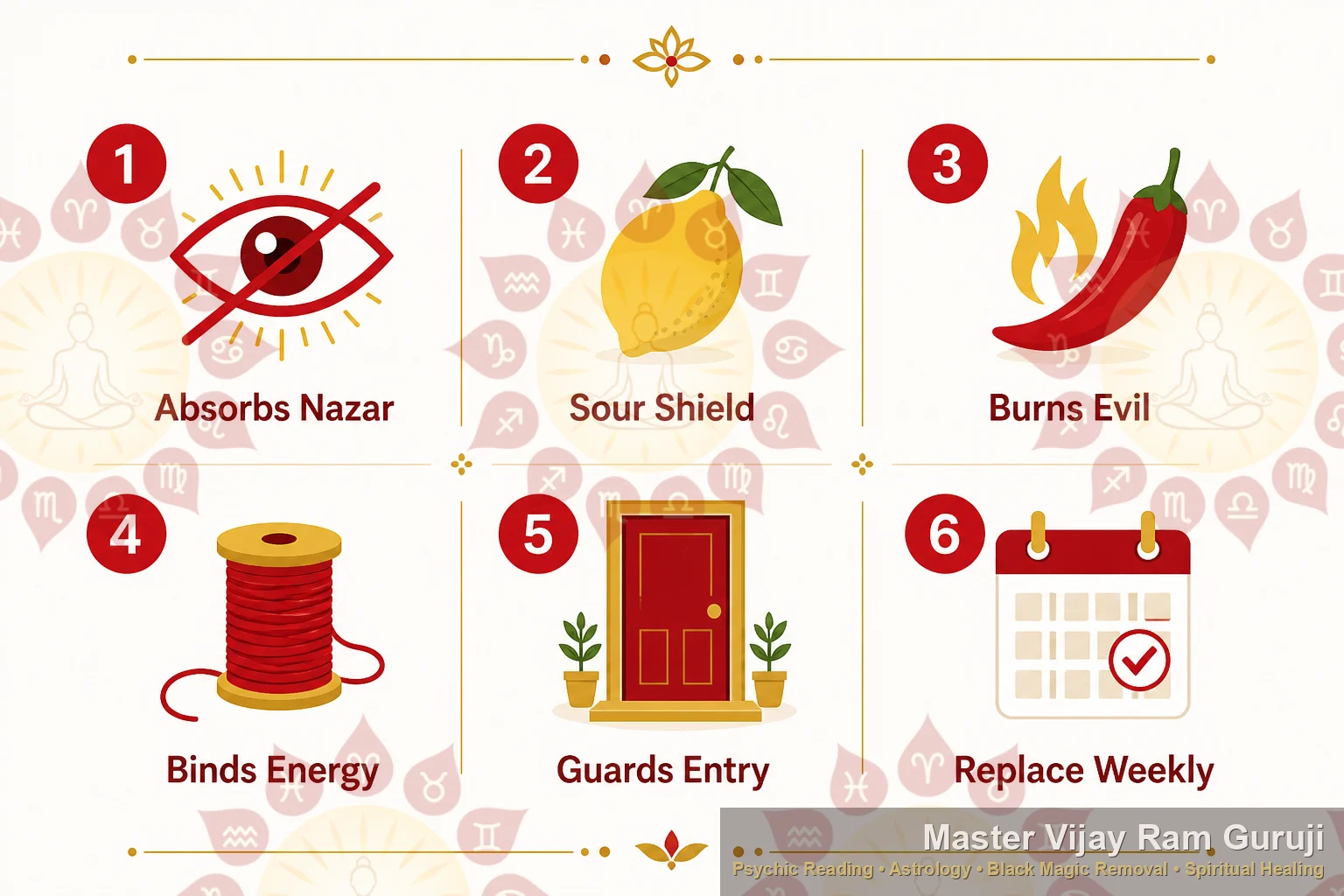
Within Vedic and folk traditions, the lemon is valued for its ability to absorb negativity. Its acidic, sour nature is thought to draw in jealous or ill-wishing energy before it can settle on the people inside a home. When the lemon shrivels or darkens quickly, many practitioners interpret this as a sign it has done its work.
Chillies carry a very different energy: they are sharp, fiery, and repellent. Folklore holds that the pungent heat of chillies burns away malicious intent and scatters harmful vibrations before they take hold. In some regional traditions, the smoke from burning dried chillies is passed around a person believed to be suffering from nazar — a practice sometimes called mirchi dhooni.
The black thread that binds them is itself significant. Black is a traditional colour of protection in many South Asian folk systems, used to bind and neutralise negative forces rather than reflect or repel them.
Why Is It Hung at the Door?
The entrance of a home is considered the most vulnerable point — the threshold where outside energy, including the gaze of visitors, first crosses into the domestic space. Hanging the nimbu mirchi string at the door means any nazar directed at the household is intercepted and absorbed before it enters.
Shops, market stalls, and new vehicles receive the same treatment for the same reason: a new or prosperous thing draws attention, and attention — however well-meaning — can carry an unconscious charge of envy in traditional belief. The lemon and chilli for nazar protection is therefore as common in a Scarborough grocery store as it is in a home in Chennai or Lahore.
How Often Should the String Be Replaced?
- Inspect the string every Saturday — Saturday is traditionally associated with Saturn and considered auspicious for protective rituals.
- Replace it when the lemon has shrivelled, turned soft, or smells sour, or when the chillies are fully dried and pale.
- Dispose of the old string at a crossroads, in flowing water, or wrapped in black cloth — never inside the home.
- String a fresh set with the same intent and, ideally, a short prayer or mantra of your tradition.
- In times of unusual stress or after a run of unexplained misfortune, replace more frequently — some families do so weekly as a matter of routine.
Signs That Nazar May Already Be Active
The nimbu mirchi totka is preventive. If nazar has already taken hold, folk tradition suggests these common signs:
- Sudden, unexplained fatigue or low mood with no clear physical cause
- Repeated minor accidents or a streak of bad luck in quick succession
- Business slowing sharply after a period of visible success
- Children crying inconsolably, or falling ill shortly after strangers admired them
- A sense of heaviness in the home or a strained atmosphere between family members
- The nimbu mirchi string darkening or shrivelling unusually fast
These experiences have many possible explanations. If health symptoms are present, please see a doctor — this practice does not replace medical care. Where the signs persist despite routine totkas, a more thorough assessment and nazar-clearing session with a qualified healer may offer deeper resolution.
When Is a Totka Not Enough?
Folk charms like the nimbu mirchi string provide everyday, preventive protection. They are not designed to address deeply rooted negative energy, intentional black magic, or persistent spiritual disturbance. In such cases, traditional Vedic practice calls for structured rituals — including specific havans, protective kavach, or a targeted cleansing process aimed at removing entrenched negative forces from a person or space.
An aura-cleansing consultation can help identify whether surface-level protection is sufficient or whether deeper work is needed. For those who feel something stronger is required, a personalised protective kavach prepared through traditional methods may be recommended following a full reading.
Consulting Master Vijay Ram Guruji in Scarborough and the GTA
Master Vijay Ram Guruji practises at 1540 Warden Ave., Scarborough, ON M1R 2S8, welcoming clients from across the Greater Toronto Area — including Markham, Pickering, Richmond Hill, and North York — as well as those who prefer phone, video, or WhatsApp consultations. Sessions are available 24 hours a day in English, Tamil, Hindi, Punjabi, Gujarati, and Urdu. To speak with him directly, call (647) 640-9586.
Frequently asked questions
What is the nimbu mirchi totka and how does it work?
The nimbu mirchi totka is a traditional South Asian folk remedy against the evil eye. A lemon and seven chillies are strung on black thread and hung at a doorway. The lemon is believed to absorb negative energy directed at the home, while chillies are thought to repel and scatter harmful vibrations.
How many chillies should be on a nazar totka string?
Most regional traditions use seven chillies, though some use five or nine — all odd numbers, which are considered protective in South Asian folk belief. Seven is the most common and widely recognised count for a nimbu mirchi nazar string.
When should I replace the lemon and chilli nazar string?
Replace the string every Saturday, or sooner if the lemon shrivels, darkens, or begins to smell strongly, and the chillies are fully dried. Disposing of the old string at a crossroads or in flowing water — not inside the home — is the traditional method.
Can lemon and chillies remove nazar that is already affecting me?
The nimbu mirchi string is primarily a preventive charm. If nazar is believed to be active and causing visible effects, a practitioner may recommend additional remedies such as a targeted energy-clearing ritual, protective kavach, or a specific havan rather than relying solely on the totka.
Is the nimbu mirchi ritual only a Hindu practice?
No. While rooted in Vedic and folk Hindu traditions, the nimbu mirchi totka is practised widely across Muslim, Sikh, and other South Asian communities. Its use spans religious boundaries, reflecting a shared cultural concern with protection from the evil eye across the subcontinent.
Does the colour of the chillies matter — green or red?
Both green and red chillies are used in different regional traditions. Red chillies are more common in northern India and are often preferred because their intense colour and heat are seen as symbolically stronger. Green chillies appear more frequently in some southern and coastal traditions.
Can I get a nazar consultation remotely if I live outside Scarborough?
Yes. Master Vijay Ram Guruji offers phone, video, and WhatsApp consultations 24 hours a day, available to clients across the Greater Toronto Area and beyond — including those in Markham, Ajax, Vaughan, and other GTA communities who cannot visit the Scarborough centre in person.
Is this practice scientifically proven?
The nimbu mirchi totka is a traditional cultural and spiritual practice, not a scientifically validated treatment. It holds deep meaning within South Asian communities and offers symbolic protection and peace of mind. For any health concerns, please consult a qualified medical professional.
People also ask
Why do Indians hang lemon and chilli outside their homes?
South Asian families hang lemon and chilli — nimbu mirchi — at doorways as a traditional protective charm against the evil eye, or nazar. The lemon absorbs jealous or negative energy, and the chillies are believed to repel it, forming a barrier at the home's most vulnerable entry point.
What is the significance of seven chillies in the nazar totka?
Seven is considered an auspicious and protective odd number in South Asian folk tradition. Using seven chillies in the nimbu mirchi string is believed to maximise its protective strength. Odd numbers generally are preferred in protective rituals across Vedic and folk practices.
How do I know if someone has given me nazar?
Common signs believed to indicate active nazar include sudden unexplained fatigue, a run of minor mishaps, children falling ill after being admired, business declining without clear reason, or a feeling of persistent heaviness. These signs have many causes; see a doctor if health issues arise.
What is the difference between nazar and black magic?
Nazar refers to harm caused unintentionally or intentionally through the gaze — envy or admiration that carries negative energy. Black magic involves deliberate rituals performed with the intent to harm. Both are addressed differently: nazar totkas and cleansing for the former; more intensive counter-rituals for the latter.
Where can I get professional nazar removal help in Toronto?
Master Vijay Ram Guruji, based at 1540 Warden Ave., Scarborough, offers nazar assessment and removal for clients in Toronto and the wider GTA. In-person and remote consultations by phone, video, or WhatsApp are available around the clock at (647) 640-9586.
References & further reading
Keep exploring
Serving Scarborough and the Greater Toronto Area
In person at 1540 Warden Ave., or by phone, video & WhatsApp — including: